
Views: 0 Author: Site Editor Publish Time: 01-06-2026 Origin: Site


Fake eyelashes are primarily manufactured using synthetic fibers, such as PBT (polybutylene terephthalate), sterilized human hair, or premium mink-inspired synthetic materials designed to mimic the texture, curl, and weight of natural lashes.
Selecting the right material is the first step toward achieving a seamless, comfortable, and long-lasting enhancement. By exploring the chemical properties and physical characteristics of different materials, users can better align their aesthetic goals with the durability and comfort requirements of their specific lifestyles. This article dives deep into the manufacturing landscape of the lash industry to help you make informed decisions.
⚡Common Materials Used in Lash Production:Overview of synthetic and natural fibers used in modern lash manufacturing.
⚡The Science of Synthetic PBT Fibers:Why high-quality thermoplastic polymers are the industry standard for durability.
⚡Mink-Inspired Synthetic Technology:How advanced fiber technology mimics the softness and luxury of animal fur without the ethical concerns.
⚡Comfort and Allergenic Considerations:Understanding how material selection impacts skin sensitivity and eye health.
⚡Choosing the Right Lash for Your Lifestyle:Factors to consider when selecting materials for long-term wear versus daily application.
⚡Sustainability and Future Trends:The shift toward eco-friendly materials and bio-based synthetic fibers.
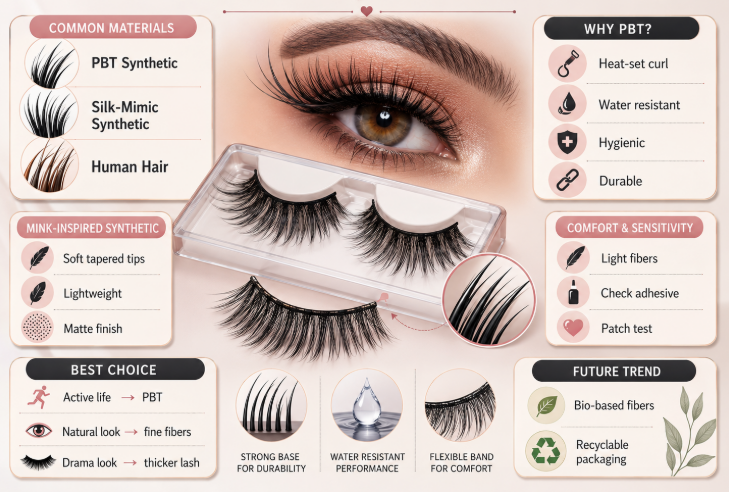
Modern lash products are typically constructed from PBT synthetic fibers, silk-mimic synthetics, or occasionally human hair, each chosen for specific performance characteristics like curl retention and flexibility.
The manufacturing of professional-grade lash extensions requires a precise balance of lightweight feel and structural integrity. Most high-performance products, such as these premium professional volume lash extensions, rely on synthetic polymers. These materials are engineered to maintain their shape even under moisture or temperature fluctuations, ensuring that the wearer achieves a consistent look throughout the day.
Natural hair options have decreased in popularity due to concerns regarding uniformity and ethical sourcing. Synthetic alternatives have advanced significantly, often surpassing natural options in terms of hygiene and standardized curl consistency. When selecting false eyelashes, it is crucial to understand that the "silk" or "mink" labels used in marketing usually refer to the texture and sheen of synthetic fibers rather than the literal source material.
Synthetic PBT (polybutylene terephthalate) is the gold standard in the industry because it is a heat-resistant, thermoplastic polymer that holds a curl better than any other artificial material.
PBT is a type of polyester that is highly valued for its ability to undergo a heat-setting process. During production, the fibers are heated and molded into specific curls (such as C, D, or L curls) that do not lose their shape after application. This durability is vital for anyone using false eyelashes as part of a professional service or a high-end personal kit.
Furthermore, PBT fibers are non-porous. This means they do not absorb oils or water, which is a massive advantage for hygiene. Because they are inert and smooth, they provide a cleaner surface that is less likely to harbor bacteria compared to organic fibers. When you utilize advanced products like pre-made fan extensions, you are benefiting from the precision of PBT manufacturing, which allows for consistent weight distribution across the lash line.
Mink-inspired synthetic fibers are highly engineered filaments designed to replicate the fine, tapered tips and luxurious matte finish of natural mink hair while maintaining the durability of synthetics.
Consumers often desire the look of real mink because of its incredibly soft texture and tapered ends. However, traditional mink lashes lack the structural memory of synthetic materials. Modern technology allows manufacturers to create synthetic fibers that are thinner at the base and taper off to a very fine point, mimicking the organic growth pattern of real hair. These false eyelashes are favored for their ability to look natural while providing a voluminous effect.
The advantages of utilizing high-quality mink-inspired synthetic fibers include:
Improved flexibility, which allows the lash to blend seamlessly with natural growth patterns.
Lightweight construction that reduces tension on the natural follicle.
Enhanced matte finish, which avoids the plastic-like sheen that can sometimes detract from the natural look.
While high-quality synthetic materials are generally hypoallergenic, comfort is determined by the weight of the fiber and the adhesive used during the application process.
The primary cause of discomfort with false eyelashes is often not the fiber itself but the weight or the chemical composition of the bond. Lightweight PBT fibers are designed to be almost weightless, ensuring the wearer does not feel "heavy-eyed." However, users with sensitive eyes should always prioritize testing the materials and adhesives before a full set is applied.
If you are concerned about potential irritation, it is vital to be prepared with the right knowledge. If you ever notice discomfort or signs of an adverse reaction, you should follow specific protocols. Understanding how to manage reactions to lash extensions is a critical skill for any frequent user. By maintaining proper hygiene and using only high-quality, professional-grade materials, the risk of reaction is minimized significantly.
Choosing the correct material for your false eyelashes depends on your daily activity level, desired volume, and the frequency with which you plan to wear them.
For those leading active lifestyles, PBT synthetic fibers are superior because they are resistant to sweat, water, and humidity. If you are looking for a dramatic, evening-wear look, you might choose a thicker gauge synthetic fiber. Conversely, for a natural, daytime professional appearance, thinner, more flexible synthetic materials are recommended.
Consider these factors when choosing your next set:
Durability requirements: Do you need them to last through high-humidity conditions?
Style preference: Are you aiming for a classic look or a voluminous "mega-volume" effect?
Maintenance: Are you willing to brush and clean the fibers regularly to keep them looking pristine?
The future of lash manufacturing is moving toward sustainable, bio-based synthetic polymers that offer the performance of traditional PBT while reducing the environmental footprint of the beauty industry.
As global awareness of environmental impact grows, the industry is researching plant-derived polymers that can be heat-set and shaped like traditional PBT. These next-generation false eyelashes aim to provide the same level of comfort and durability without the long-term waste associated with traditional plastics.
Innovations are also occurring in the sterilization and packaging processes. Brands are increasingly moving toward recyclable materials for storage cases, ensuring that the entire experience—from the material on your eyes to the packaging in your vanity—reflects a modern, conscious approach to beauty.
In conclusion, understanding what your false eyelashes are made of is about more than just trivia—it is about ensuring the highest standards of safety, longevity, and aesthetics. Whether you prefer the structural perfection of PBT or the soft, tapered elegance of mink-inspired synthetics, being aware of material quality helps you choose products that enhance your natural beauty while protecting your eye health. If you are ever unsure about a product's composition, always prioritize brands that provide transparency in their manufacturing processes and offer detailed information on their materials.